
Interventional Care

We notice that you are visiting us from . This site only services US-based visitors. Would you like to visit the site that is appropriate for your location?
How compatible are Easy Screen® wipes on healthcare touch screen equipment?
70% IPA is the most compatible formulation for sensitive touch screen equipment in healthcare. It is the most referenced formula in equipment manufacturer’s instructions for use. PDI has performed extensive compatibility work on touch screen materials and equipment to confirm compatibility. Easy Screen wipes are compatible with polycarbonate, glass, aluminum silicate, acrylic, stainless steel and more!
[Cleaning the screen of your mobile device with a wipe containing alcohol may reduce the lifespan of any anti-fingerprint coating. Please check your device manufacturer’s cleaning instructions.]
Does NFPA 30 apply to PDI disinfectants (Germicidal wipes and sprays)?
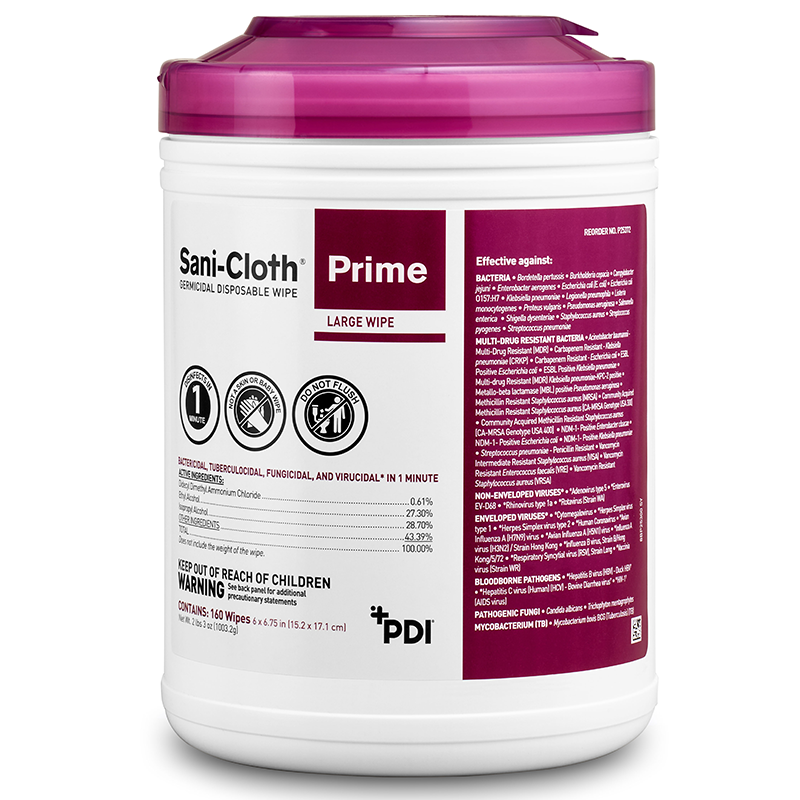
NFPA 30 applies to the storage of flammable and combustible liquids. PDI products, including Sani-HyPerCide® wipes and spray, Sani-24® spray, Sani-Cloth® Prime wipes, Super Sani-Cloth wipes, and Sani-Cloth Plus cloth, as well as Easy Screen® Cleaning Wipe, are exempt from the requirements of NFPA 30. This is because the scope of NFPA 30 (Section 1.1) states that it applies to the storage, handling, and use of flammable and combustible liquids. Even though our products contain liquids that have been classified as flammable on the SDS, the wipes themselves are not classified as liquid products. Rather, they are wipes impregnated with flammable liquids, even though there may be a small amount of free liquid in the bottom of the canister. According to the EPA, wipes are classified as a mixture product containing solids and liquids. The NFPA has also confirmed that wipes are not considered to be liquid for the purposes of NFPA 30. In addition, NFPA Section 9.1.4(4) states that it does not apply to “medicines, foodstuffs, cosmetics and other consumer products that contain more than 50 percent by volume of water-miscible liquids, with the remainder of the solution not being flammable where packaged in individual containers that do not exceed 5L (1.3 gallons) capacity.” For the above reasons, NFPA 30 does not apply to PDI products. Please verify these storage requirements against your insurance carrier requirements since they may be more stringent than NFPA 30.
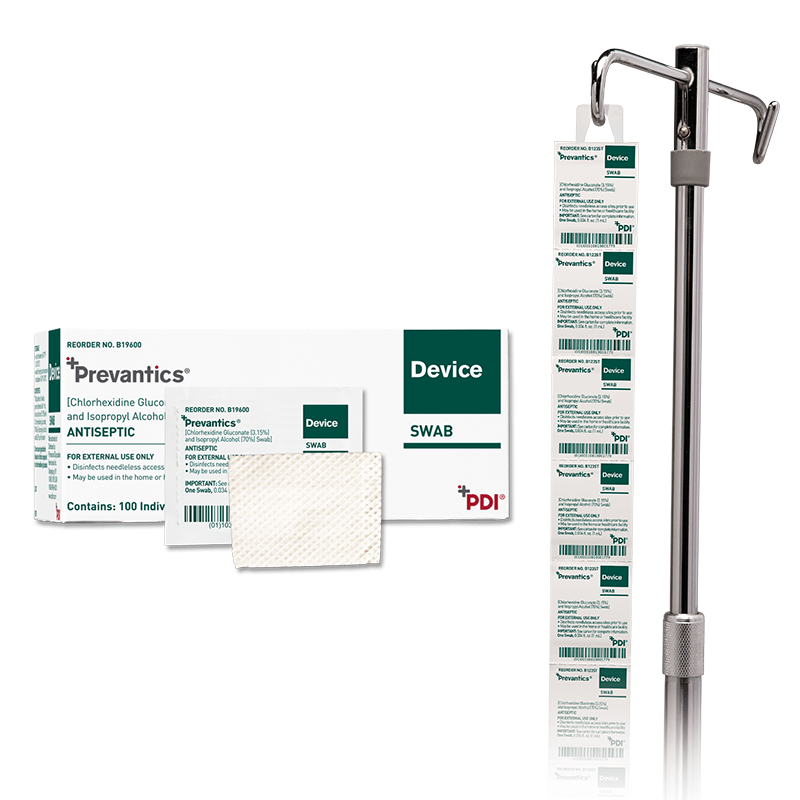
What evidence-based clinical guidelines support the use of the Prevantics® Device Swab for disinfection of needleless access sites prior to use?
The following evidence-based clinical guidelines support the use of Chlorhexidine Gluconate/Alcohol for disinfection of needleless access sites prior to use:
1. Guidelines for the Prevention of Intravascular Catheter-Related Infections, US Centers for Disease Control and Prevention (CDC)
2. Standards of Practice, Infusion Nurses Society (INS)
3. Strategies to Prevent Central-Line Associated Bloodstream Infections in Acute Care Hospitals, Society for Healthcare Epidemiology of America (SHEA)
4. National Patient Safety Goals, The Joint Commission
5. Clinical Practice Guidelines for Diagnosis and Management of Intravascular Catheter-Related Infection, Infectious Disease Society of America (IDSA)
6. Elimination Guide to Infections in Hemodialysis Settings, Association for Professionals in Infection Control and Epidemiology (APIC)
If I use the Prevantics® Device Swab product, will I still need to use an alcohol impregnated cap?
Not necessarily. If clinicians follow all existing infection prevention and control measures, such as hand hygiene, use of personal protective equipment, use of chlorhexidine-based skin antisepsis, etc. then the use of an alcohol impregnated cap may not be clinically indicated. This would be evaluated by ongoing surveillance of HAI rates.
What are considered “dry” sites and “wet” sites?
Dry sites are areas where there are no skin folds, such as the abdomen, back and forearm, and no evidence of moisture caused by diaphoresis. Wet sites are areas with skin folds, such as the groin area, under arms, and under breasts, as well as areas that may be moist due to diaphoresis.
What is the difference between an occlusive and semi-occlusive dressing?
An occlusive dressing is a non-permeable dressing, which means that no air or moisture can penetrate in or out. A semi-occlusive (semi-permeable, transparent) dressing allows the wound to “breathe” (air can penetrate in and out) but at the same time, protects the wound from outside liquids. Commonly used dressings in vascular access are semi-occlusive, transparent dressings.
Do I need to wipe off the Prevantics® antiseptic liquid from the skin after application?
No. Prevantics contains both 3.15% Chlorhexidine Gluconate and 70% Isopropyl Alcohol which should be left on the skin to provide continued antimicrobial activity.
Why are Prevantics® Skin Antiseptics applied using back and forth strokes?
The back and forth strokes provide friction which allows for deeper penetration of the antiseptic into the cracks and fissures of the skin in the epidermis.
Do Sani-Cloth®, Sani-Prime® and Easy Screen® products carry California Proposition 65 Warning?
Sani-Cloth, Sani-Prime and Easy Screen products DO NOT carry California Proposition 65 Warning. Proposition 65, officially known as the Safe Drinking Water and Toxic Enforcement Act of 1986, requires the state to maintain and update a list of chemicals known to the state to cause cancer or reproductive toxicity.
Which products are compatible with my equipment?
Our products are designed to be compatible. Extensive work has been performed on materials and equipment to confirm compatibility. For information on Compatible by Design™, our comprehensive program and resources for improving healthcare equipment compatibility, review our “PDI Material Compatibility Reference Guide”, our resources, and use our Equipment Compatibility Tool to learn more!
Please refer to the surface or equipment manufacturer’s guidelines for approved disinfecting instructions and contact your local PDI representative or Customer Care with any additional questions..
Does PDI offer a product that can be used to clean computer hardware, touch screens and keyboards?
It is recommended that all high-touch surfaces be routinely cleaned and disinfected between uses, or anytime they become visibly soiled. The use of PDI’s Sani-Cloth® brand disinfecting wipes are generally safe on computer keyboards and mice, however they are not intended for use on touchscreen monitors. PDI’s Easy Screen® Cleaning Wipe was specifically developed for use on touchscreen equipment, and PDI performed extensive testing on touchscreen materials to confirm compatibility. Its 70% IPA formula is the most referenced formula in equipment manufacturer’s instructions for use. Easy Screen wipes are also compatible with polycarbonate, glass, aluminum silicate, acrylic, stainless steel and more!
[Cleaning the screen of your mobile device with a wipe containing alcohol may reduce the lifespan of any anti-fingerprint coating. Please check your device manufacturer’s cleaning instructions.]